


The Rise of English Sports Cards (1900–1930)
Introduction
The period between 1900 and 1930 witnessed a profound transformation in the culture, manufacturing, and social importance of sports cards in England, particularly those focused on football (soccer), cricket, and rugby.
What began as ephemeral advertising inserts for tobacco products soon developed into a popular and enduring collecting phenomenon. These cards intersected with changing printing technologies, the rise of mass consumer culture, and shifting views toward recreation and fandom.
This article explores the origins and evolution of sports cards in England during this critical era, examining production methods, major firms, notable personalities, design developments, collecting practices, and broader cultural significance.
Historical Context: Social, Economic & Sporting England (1900–1930)
The first three decades of the twentieth century brought dramatic transformation:
- Britain at the height of imperial power
- Rapid urbanisation
- Expansion of mass media
- Technological progress during the Edwardian era
- The upheaval and aftermath of World War I
Sport became central to national life:
- Football emerged as the dominant working-class spectator sport.
- Cricket retained associations with tradition and empire.
- Rugby divided along class and geography — union in the south, league in the industrial north.
At the same time, tobacco consumption peaked. Cigarette manufacturers sought innovative ways to build customer loyalty, and sports cards flourished within this commercially competitive and sport-obsessed culture.
Origins and Early Development (1900–1905)
From Packaging Insert to Cultural Artifact
The earliest English sports cards began as cigarette pack “stiffeners.” These practical inserts quickly evolved into collectible picture cards featuring athletes and public figures.
By the early 1900s, companies such as:
- W.D. & H.O. Wills
- John Player & Sons
- Ogden’s
were issuing themed sports sets to drive repeat purchases and build brand loyalty.
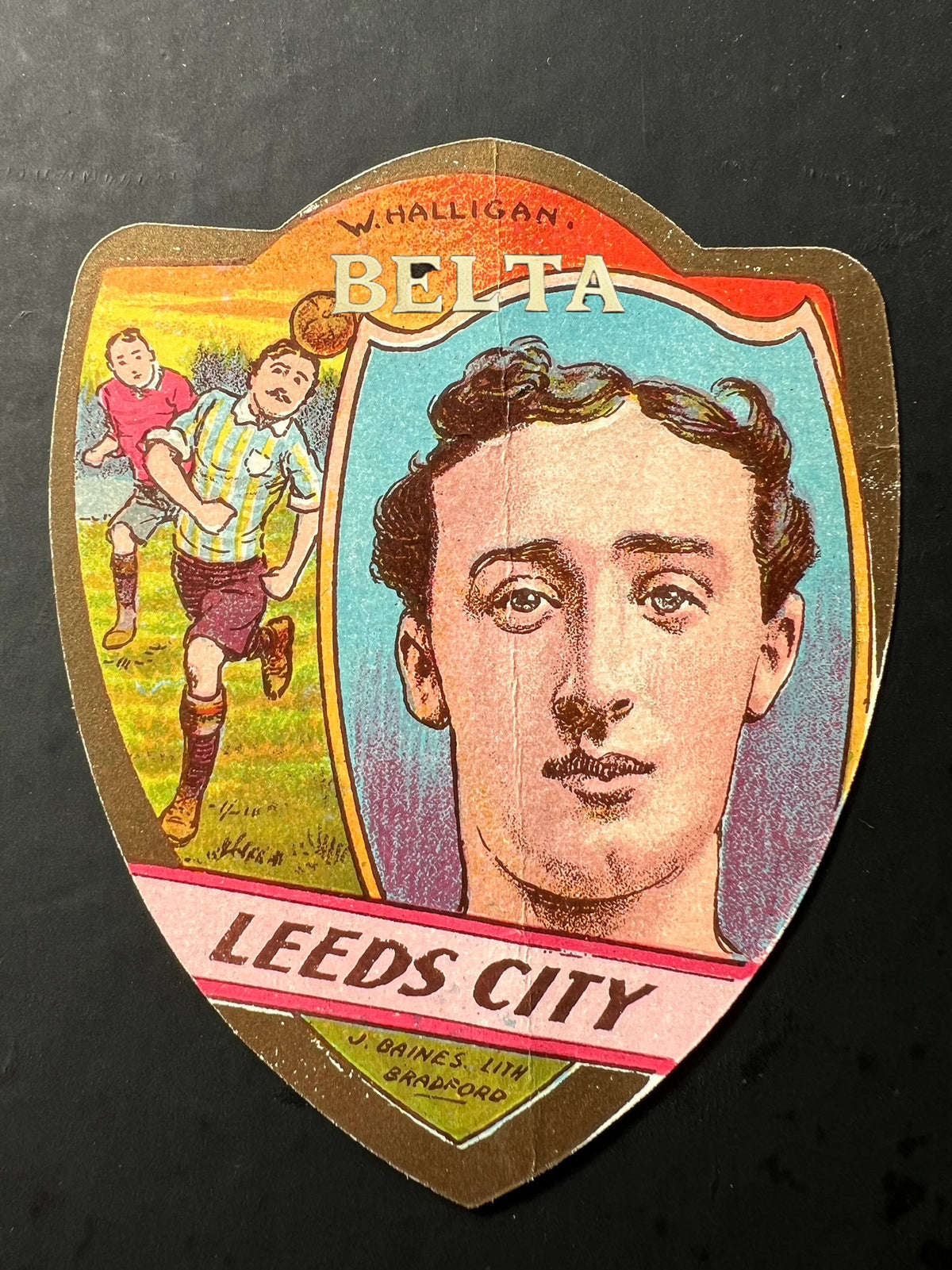
Early cards featured rich chromolithographic illustrations of footballers like Steve Bloomer, cricket legends such as W.G. Grace, and prominent rugby internationals.
Printing and Manufacturing Techniques (1900–1930)
Lithography and Chromolithography
Production relied heavily on lithography and multi-plate chromolithography, producing vibrant, detailed imagery that remains highly collectible today.
Letterpress and Photomechanical Printing
Letterpress printing was commonly used for textual information on card backs. By the 1920s, photomechanical processes enabled black-and-white photographic cards, marking a shift toward realism.
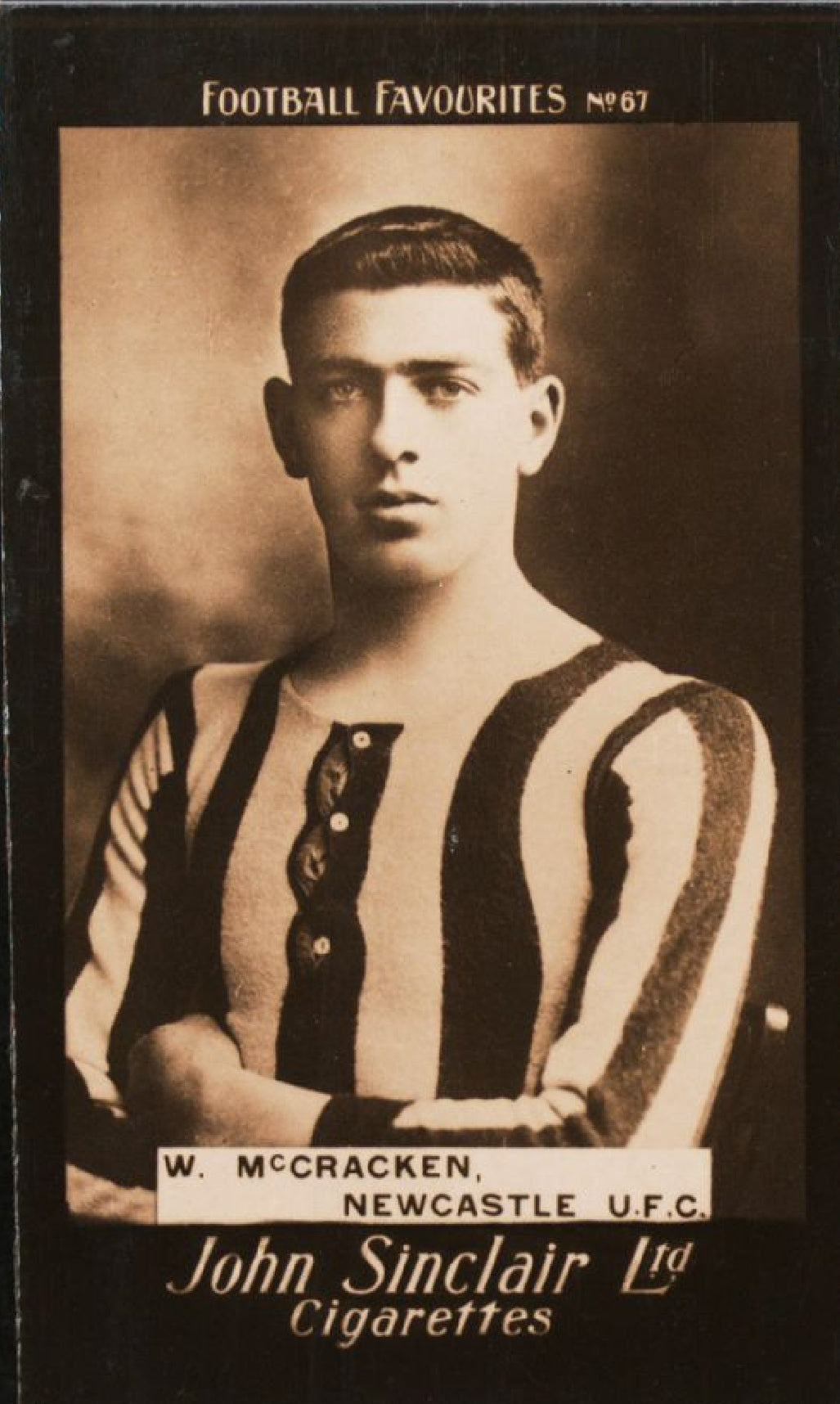
The 1908 John Sinclair Football Favourites series exemplifies this photographic transition.
Silk and Fabric Inserts (1914–1925)
A notable innovation was the introduction of silk inserts featuring club colours, crests, and sporting heroes — adding texture and prestige to collectible issues.
Mass Production and Quality
Factories such as Churchman’s in Ipswich could produce up to one million cigarettes per day. Card stock quality varied, with premium national issues printed on heavier stock and regional short-run sets often produced on lighter card.
Major Manufacturers and Regional Producers
The Big Three: Wills, Churchman & Ogden’s
W.D. & H.O. Wills (Bristol)
Early pioneer of tobacco card inserts. Notable for the 1902 Football Series and multiple cricket and rugby issues.
Churchman (Ipswich)
Dominant pictorial card producer between 1900 and 1930. Known for the 1909 Football Club Colours and 1929/1935 Rugby Internationals sets.
Ogden’s (Liverpool & London)
Recognised for high production values, including the 1926 Famous Rugby Players.
Regional and Short-Run Producers
John Sinclair Ltd. – Football Favourites (1908)
53 black-and-white photographic cards, regionally distributed in the North East and Scotland. Among the scarcest English football sets.
Robert Sinclair
Produced limited regional football issues with extremely small print runs.
St Petersburg Cigarettes (Portsmouth)
Early 1900s football cards including the famous Steve Bloomer issue. Surviving examples have realised tens of thousands of pounds at auction.
Singleton & Cole (Shrewsbury)
The 1905 photographic Footballers set remains exceptionally scarce and highly sought after.
Key English Sports Card Sets (1900–1930)
| Manufacturer | Set | Year | Sport | Rarity |
|---|---|---|---|---|
| Wills | Football Series | 1902 | Football/Rugby | Medium |
| Churchman | Football Club Colours | 1909 | Football/Rugby | Scarce |
| Ogden’s | Famous Rugby Players | 1926 | Rugby | Rare |
| John Sinclair | Football Favourites | 1908 | Football | Very Rare |
| St Petersburg | Footballers | c.1900 | Football | Extremely Rare |
| Singleton & Cole | Footballers | 1905 | Football | Very Rare |
The Rise of Cartophily
“Cartophily” — the love of cards — developed into a widespread hobby. Children and adults traded duplicates, searched for missing numbers, and built complete albums.
Cards functioned as miniature encyclopaedias, spreading sporting knowledge before the television era and reinforcing club allegiance and social identity.
By the late 1920s, dealers such as G.A. Johnson and the London Cigarette Card Company helped formalise pricing and cataloguing, laying the foundations for organised collecting societies.
Rarity, Value & Market Trends
Value is influenced by:
- Age
- Limited production
- Regional distribution
- Player significance
- Condition and provenance
Mainstream Wills and Churchman issues remain accessible to collectors, while regional sets such as St Petersburg, Sinclair, and Singleton & Cole have become investment-grade artefacts.
Cultural Impact and Legacy
Sports cards were more than advertising novelties. They spread sporting knowledge, shaped collective memory, and reinforced local and national identity.
Through sports cards, we can trace the rise of mass media culture, sporting celebrity, and consumer identity in early twentieth-century England.
Conclusion
Between 1900 and 1930, English sports cards evolved from simple tobacco stiffeners into enduring cultural artefacts.
National manufacturers such as Wills, Churchman, and Ogden’s refined production standards, while regional producers including Robert Sinclair, John Sinclair Ltd., St Petersburg Cigarettes, and Singleton & Cole created some of the rarest and most historically significant football cards known.
These early cards remain tangible links to England’s sporting past — preserving not only the images of athletes, but the spirit of an era.