

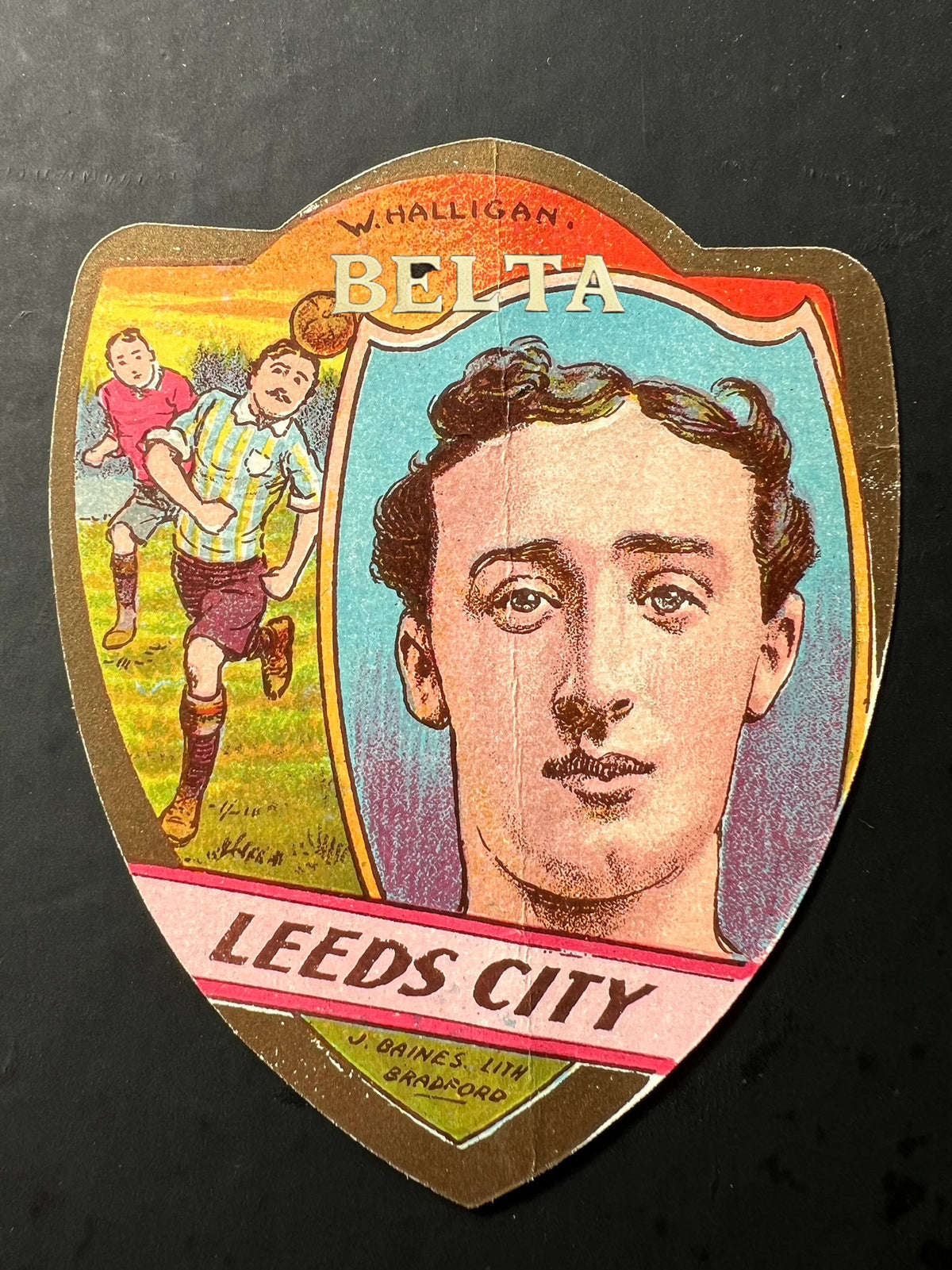


The Vintage Sports Ticket Market: Why Football and Rugby May Be the Next Serious Collecting Frontier
For decades, trading cards have dominated the sports collectibles conversation.
But quietly — and increasingly — vintage sports tickets are emerging as one of the most historically important and structurally scarce segments of the market.
And nowhere is this more compelling than in football and rugby — two sports whose roots stretch deep into the 19th century.
Unlike cards, tickets were never meant to survive.
They were printed for entry.
Collected at the turnstile.
Thrown away.
That single fact creates real scarcity.
A Ticket Is Not a Card
A trading card represents an athlete.
A ticket represents a moment.
It is tied to:
- A specific match
- A specific date
- A specific stadium
- Sometimes even a specific seat
A 1966 World Cup Final ticket doesn’t just depict Bobby Charlton.
It proves someone was inside Wembley when England lifted the trophy.
An 1880s Home Nations rugby ticket doesn’t celebrate a player — it marks attendance in the foundation years of international rugby itself.
Tickets are historical documents disguised as ephemera.
Why Football and Rugby Tickets Matter
Both sports share characteristics that make their early tickets especially interesting:
- Organised competition from the 1870s
- Rapid professionalisation in the 1880s–1890s
- Early international fixtures
- Deep working-class cultural roots
- Massive modern global audiences
Yet compared to baseball, their early ticket markets remain underdeveloped.
That imbalance is significant.
The Power of Event Significance
In the ticket market, the event is everything.
Football Examples
High-demand categories include:
- Early FA Cup Finals (1870s–1910s)
- Scotland vs England Home Internationals
- 1908 Olympic Football Final
- 1930 World Cup matches
- 1958 World Cup Final (Pelé’s breakthrough)
- 1966 World Cup Final
- 1970 Brazil World Cup Final
- 1986 Argentina vs England (“Hand of God”)
The earlier the match, the rarer the surviving ticket.
Pre-World War I football tickets — especially from league deciders or cup finals — are exceptionally scarce.
Many were simple printed stock with little expectation of survival.
Rugby Examples
Rugby may be even more underappreciated.
Key areas of significance include:
- Early Home Nations Championship matches (1880s–1910s)
- First Wales vs New Zealand meetings
- 1905 “Original All Blacks” tour matches
- 1924 Invincibles tour
- 1973 Barbarians vs New Zealand
- First Rugby World Cup matches (1987)
Pre-war rugby union tickets are rarely seen at auction.
Many matches were hosted at grounds that no longer exist.
Unlike football, rugby retained a more amateur ethos until the 1990s — meaning fewer tickets were preserved as collectibles.
Scarcity may be more severe than football in certain eras.
Built-In Scarcity
Every match had a fixed attendance.
And most spectators discarded their ticket.
Consider:
- A 1905 Wales vs New Zealand rugby ticket
- An 1895 FA Cup Final ticket
- An 1884 England vs Scotland international
How many survived?
Likely very few.
Unlike trading cards — which were produced in tens of thousands — tickets were printed only for those present.
They are finite by design.
Condition: Fragility Creates Premiums
Tickets were:
- Folded into coat pockets
- Exposed to rain
- Torn at entry
- Stamped or punched
As a result, high-grade examples are rare.
Minor differences matter greatly:
- Heavy creases
- Paper loss
- Fading ink
- Staining
Grading services such as PSA and SGC have brought structure to this market, but population data remains thin — especially for 19th and early 20th century football and rugby material.
Condition scarcity in these sports may be under-recognised.
The Globalisation Effect
Football is the world’s most popular sport.
Rugby union has grown significantly across:
- France
- South Africa
- New Zealand
- Australia
- Japan
As global fan bases mature, interest often moves backward.
Collectors begin asking:
- Where did this rivalry start?
- What was the first meeting?
- What did the original fixture look like?
Early match tickets answer those questions.
As football expands into North America and Asia, foundational artifacts — especially from 1880–1930 — may see re-evaluation.
Rugby’s professional era (post-1995) may also drive renewed interest in amateur-era heritage.
Why This Market Remains Inefficient
Compared to trading cards:
- There is no comprehensive football ticket census
- Rugby ticket scholarship is limited
- Survival rates are unknown
- Many tickets remain in private hands
- Auction history is inconsistent
That creates pricing inefficiencies.
Knowledge still matters.
Collectors who understand early tournament structures, historic tours, and foundational rivalries often identify undervalued material.
Pre-War Material: The Deep Value Zone?
True vintage football and rugby tickets from 1870–1939 may represent the most intellectually interesting part of the market.
Examples worth watching:
Football
- Early FA Cup Finals
- League deciders pre-1914
- Scotland vs England Home Internationals
- Early South American internationals
- 1920s Olympic tournaments
Rugby
- 1880s–1900s Home Nations
- Early All Blacks tours
- First France vs England fixtures
- 1920s Five Nations deciders
These are not mass-produced collectibles.
They are pieces of sporting origin history.
Risks
This market is not without risk:
- Reprints and modern facsimiles
- Poor provenance documentation
- Restoration attempts
- Thin buyer pools for obscure fixtures
Liquidity can be uneven.
But that also reduces speculative volatility.
Looking Toward 2030
Several structural forces favour vintage football and rugby tickets:
- Continued globalisation of football
- Rising Rugby World Cup viewership
- Institutional archiving of sports heritage
- Grading adoption
- Increasing desire for event-specific memorabilia
As collectibles mature beyond player-centric assets, event artifacts may form a core category.
Tickets sit at the intersection of:
- History
- Attendance
- Scarcity
- Cultural significance
Cards celebrate athletes.
Tickets capture moments.
And in football and rugby — where rivalries and national identity run deep — moments often define generations.
The vintage sports ticket market, particularly in football and rugby, remains under-researched and under-owned relative to its historical importance.
For collectors willing to study match history rather than just player statistics, this may be one of the most compelling segments of the decade ahead.